100+ Riddles for Seniors With Answers for Every Occasion
Riddles for seniors are short, gentle brain teasers built around familiar, nostalgic themes like family, home, and everyday routines, designed to be solvable without frustration.
After running these riddles during a weekly visit with residents at a local senior center, the pattern was clear: the ones that landed best weren’t the trickiest, they were the ones tied to something familiar, like a porch swing or a recipe card, since those sparked stories as much as answers.
This guide collects 100 original riddles for seniors with answers, sorted by theme and difficulty, each with an answer, a difficulty rating, and a short explanation.
Gentle and Easy Riddles for Seniors
These gentle and easy riddles for seniors are the simplest riddles in the collection, ideal for a first riddle session or for anyone who prefers a warm-up before tackling harder ones. Each relies on one clear, familiar clue.
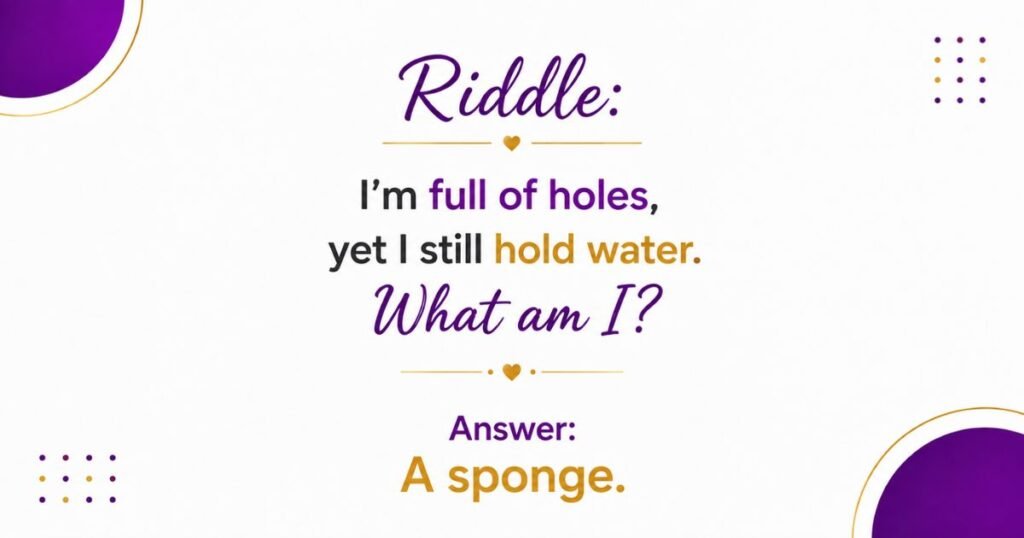
Difficulty: Easy
Explanation: Plays on the double meaning of “hands” a clock’s hands versus a person’s hands.
Difficulty: Easy
Explanation: Simple cause-and-effect riddle tied to a familiar household object.
Difficulty: Easy
Explanation: Reuses familiar body-part language in an unfamiliar context to create gentle misdirection.
Difficulty: Easy
Explanation: Everyday object riddle relying on basic logic about use and wear.
Difficulty: Easy
Explanation: Classic riddle format built on a familiar daily pattern.
Difficulty: Easy
Explanation: Simple abstract riddle about a promise being shared without being lost.
Difficulty: Easy
Explanation: Contrast riddle “full of holes” typically implies something can’t hold anything.
Difficulty: Easy
Explanation: Straightforward riddle using a body-part word applied to a household object.
Difficulty: Easy
Explanation: Classic paradox riddle that gently challenges assumptions about “taking away.”
Difficulty: Easy
Explanation: Familiar, visual riddle rooted in everyday outdoor experience.
Classic Riddles Seniors Will Remember
Many older adults grew up trading these kinds of classic riddles for seniors in classrooms or around the dinner table, so this section leans on familiar formats that may spark a “I remember this one!” reaction.
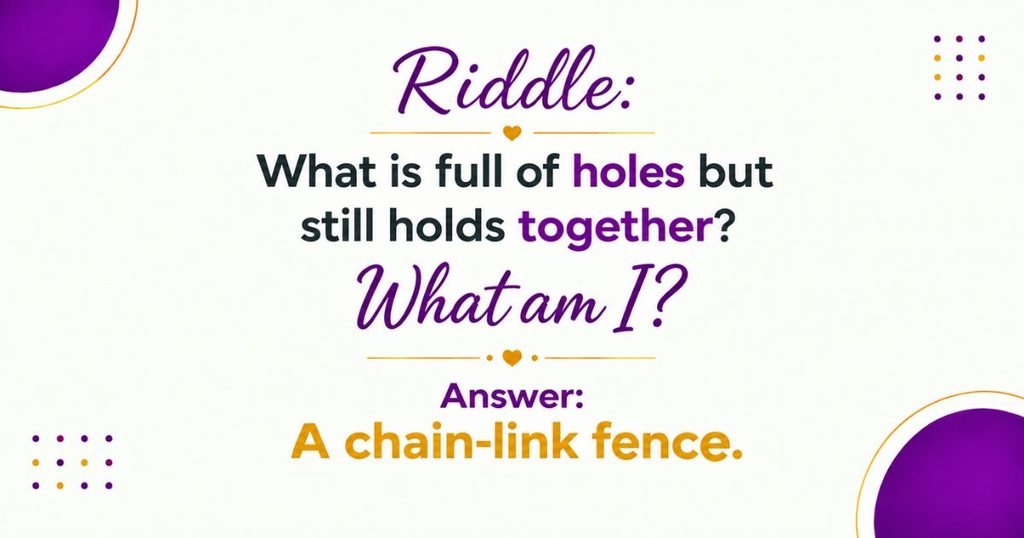
Difficulty: Easy
Explanation: Classic paradox riddle familiar to many generations.
Difficulty: Easy
Explanation: Gentle, relatable riddle that often gets a knowing smile from older solvers.
Difficulty: Medium
Explanation: A well-known riddle format that plays on the idea of “traveling” without physically moving.
Difficulty: Medium
Explanation: Abstract riddle requiring a shift away from thinking about physical objects.
Difficulty: Easy
Explanation: Classic riddle using aging language metaphorically, which often resonates well with senior audiences.
Difficulty: Medium
Explanation: Wordplay riddle focused on letter frequency rather than time itself.
Difficulty: Easy
Explanation: Classic riddle relying on the double meaning of “keys.”
Difficulty: Easy
Explanation: Familiar riddle format using “ring” in its sound-based meaning instead of jewelry.
Difficulty: Medium
Explanation: Builds on the earlier sponge riddle’s paradox structure with a different object.
Difficulty: Easy
Explanation: Wordplay riddle using “catch” in its illness-related sense.
Funny Riddles for Seniors
Humor keeps a riddle session light, especially in group settings with funny riddles for seniors. These lean on gentle puns and light irony rather than sharp or edgy jokes.
Difficulty: Easy
Explanation: Pun on “family tree” as both a literal tree and a genealogy chart.
Difficulty: Easy
Explanation: Gentle, self-aware humor about aging that many older adults enjoy.
Difficulty: Easy
Explanation: Light pun on “shuffling,” which can mean cards or a slow walk.
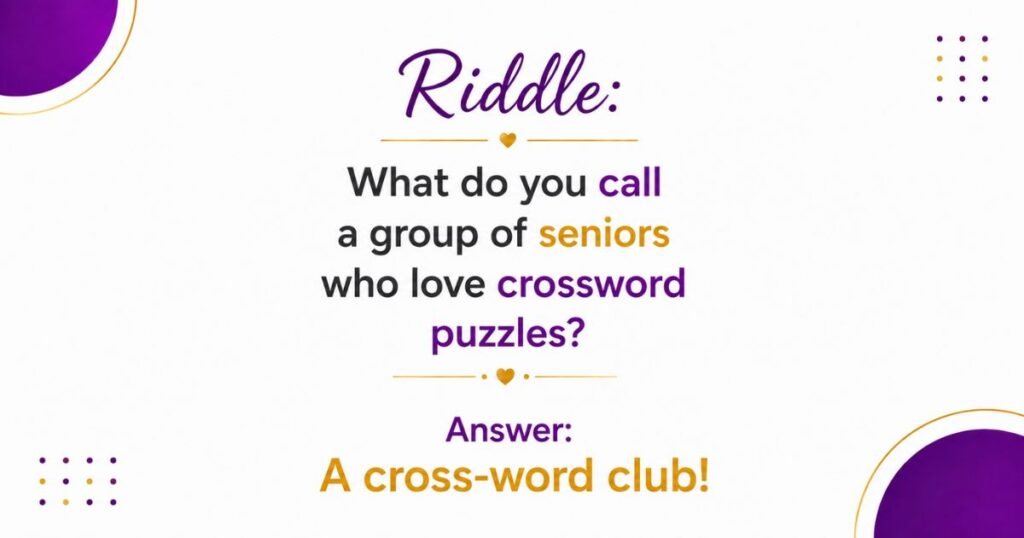
Difficulty: Easy
Explanation: Simple wordplay combining “crossword” into a club name.
Difficulty: Easy
Explanation: Classic pun on “draw,” meaning both to sketch and to close curtains.
Difficulty: Medium
Explanation: Invented pun blending “anniversary” with “arithmetic.”
Difficulty: Easy
Explanation: Warm, affectionate joke rather than a strict logic riddle.
Difficulty: Easy
Explanation: Gentle, affectionate joke playing on a common, relatable habit.
Difficulty: Easy
Explanation: Simple double meaning of “rock” as movement and as slang for having fun.
Difficulty: Easy
Explanation: Straightforward wordplay connecting “golden years” with “golden oldies” music.
Nostalgia and Memory Riddles
This section leans into familiar objects and routines from earlier decades, the kind of nostalgia riddles that often spark a story alongside the answer.
Difficulty: Easy
Explanation: Nostalgic riddle built around a household fixture common in many older homes.
Difficulty: Easy
Explanation: Sensory-based riddle designed to spark a familiar morning memory.
Difficulty: Easy
Explanation: Nostalgic riddle rooted in a common backyard or porch memory.
Difficulty: Medium
Explanation: Slightly more poetic phrasing describing a photo without naming it directly.
Difficulty: Easy
Explanation: Everyday-routine riddle describing the daily newspaper delivery.
Difficulty: Easy
Explanation: Nostalgic riddle tied to a common hobby among older generations.
Difficulty: Easy
Explanation: Sensory, music-based riddle meant to trigger a personal memory.
Difficulty: Easy
Explanation: Hobby-based riddle describing the slow, repetitive nature of knitting.
Difficulty: Easy
Explanation: Similar structure to the grandfather clock riddle but with a distinct mechanism.
Difficulty: Easy
Explanation: Cozy, routine-based riddle meant to evoke a relaxing memory.
Family and Grandchildren Riddles
These riddles focus on family connections, a theme that resonates strongly with many senior audiences and works especially well during riddles for grandchildren and family visits.
Difficulty: Easy
Explanation: Warm, relatable riddle built around a common daily joy.
Difficulty: Easy
Explanation: Nostalgic riddle tied to family tradition and handwriting recognition.
Difficulty: Easy
Explanation: Everyday family-life riddle with a light practical twist.
Difficulty: Medium
Explanation: Slightly wry riddle acknowledging how address books get messier over time.
Difficulty: Easy
Explanation: Warm, seasonal riddle describing a shared family tradition.
Difficulty: Easy
Explanation: Routine-based riddle tied to a common, gentle daily habit.
Difficulty: Easy
Explanation: Familiar daily-routine riddle appealing to puzzle lovers specifically.
Difficulty: Easy
Explanation: Warm, visual riddle describing a common household display.
Difficulty: Medium
Explanation: Slightly abstract riddle about oral tradition and shared memory.
Difficulty: Medium
Explanation: Warm riddle built on the idea of a reserved, familiar spot.
Tricky Riddles for Sharp Minds
For seniors who enjoy a bigger mental challenge, this section introduces tricky riddles for sharp minds that require a bit more lateral thinking, without becoming frustratingly obscure.
Difficulty: Medium
Explanation: Reworded version of a classic paradox, testing whether the logic still holds up under new phrasing.
Difficulty: Medium
Explanation: Elimination-style riddle that works by ruling out what’s missing rather than describing what’s present.
Difficulty: Medium
Explanation: Abstract riddle requiring a shift from physical to emotional interpretation.
Difficulty: Medium
Explanation: Uses familiar words (“bed,” “mouth”) in their geographic sense rather than their literal one.
Difficulty: Hard
Explanation: Requires thinking about an absence of light as a “thing” rather than a lack of one.
Difficulty: Hard
Explanation: Personification riddle that plays with the idea of “needs” outside of living things.
Difficulty: Medium
Explanation: Similar structure to riddle 54 but adds “runs” as an additional layer of wordplay.
Difficulty: Medium
Explanation: Classic riddle with two valid answers depending on interpretation, both tied to the word “eye.”
Difficulty: Hard
Explanation: Abstract riddle that plays with the paradox of speaking about something that ends the moment you speak.
Difficulty: Hard
Explanation: Philosophical riddle requiring a shift from physical to conceptual thinking.
Wordplay Riddles for Seniors
This group leans into puns and double meanings, ideal for readers who enjoy the “aha” moment of a clever twist more than a hard logic puzzle, the kind wordplay riddles for seniors are known for.
Difficulty: Easy
Explanation: Classic pun hidden inside a compound word.
Answer: “Grand” and “Grands” both describe the same family member.
Difficulty: Medium
Explanation: Playful wordplay riddle built around the flexible use of “grand” in family terms.
Difficulty: Medium
Explanation: Combines “eye of a needle” with the everyday sewing pairing of thread and needle.
Difficulty: Easy
Explanation: Wordplay riddle using “serve” in its sports meaning rather than its dining meaning.
Difficulty: Easy
Explanation: Classic pun contrasting a tree’s bark with a dog’s bark and bite.
Difficulty: Medium
Explanation: Double meaning of “coat” as clothing versus a layer of paint.
Difficulty: Easy
Explanation: Familiar riddle using anatomical language applied to an everyday object.
Difficulty: Easy
Explanation: Simple riddle applying a body part to household furniture.
Difficulty: Medium
Explanation: Abstract riddle shifting focus from visual to auditory understanding.
Difficulty: Hard
Explanation: Visual wordplay riddle relying on the specific letter shapes involved.
Riddles for Senior Game Nights and Group Activities
These riddles work well read aloud in a group setting, the kind of riddles for senior game night that invite guessing and discussion rather than requiring a single quiet solver.
Difficulty: Easy
Explanation: Open-ended, conversational riddle meant to spark discussion in a group.
Difficulty: Easy
Explanation: Group-activity riddle describing a familiar communal game.
Difficulty: Easy
Explanation: Light, humorous riddle referencing a well-known board game mechanic.
Difficulty: Easy
Explanation: Direct, descriptive riddle useful as a quick group warm-up.
Difficulty: Easy
Explanation: Descriptive riddle tied to a popular group or solo senior activity.
Difficulty: Medium
Explanation: Wordplay riddle relying on chess terminology without naming the game directly.
Difficulty: Medium
Explanation: Descriptive riddle appropriate for a lighthearted group guessing game.
Difficulty: Easy
Explanation: Simple, celebratory riddle that pairs well with an actual bingo session afterward.
Difficulty: Medium
Explanation: Descriptive riddle useful for game-night groups who enjoy word games.
Difficulty: Medium
Explanation: Riddle describing the setup ritual familiar to many card game players.
Short and Simple Riddles for Seniors
For quick sessions, or for solvers who prefer brevity, this section keeps every short riddles for seniors to a single short line.
Difficulty: Easy
Explanation: Short, familiar riddle relying on a single body-part comparison.
Difficulty: Medium
Explanation: Compact version of the classic silence riddle for a quick group round.
Difficulty: Medium
Explanation: Short-form version of the geographic wordplay riddle used earlier.
Difficulty: Easy
Explanation: Compact paradox riddle that’s easy to say aloud and remember.
Difficulty: Easy
Explanation: Short riddle using a single body-part reference for quick solving.
Difficulty: Medium
Explanation: Brief abstract riddle suitable for a fast-paced group round.
Difficulty: Easy
Explanation: Short version of the clock riddle theme for variety within the same session.
Difficulty: Medium
Explanation: Compact restating of a classic postage stamp riddle.
Difficulty: Medium
Explanation: Short wordplay riddle contrasting a boxing ring with a telephone ring.
Difficulty: Medium
Explanation: Quick abstract riddle suitable for a closing question in a group session.
Riddles for Memory Care and Brain Health Activities
This final section is designed with activity directors and caregivers in mind, riddles for memory care that are gentle, familiar, and well suited to a slower-paced group setting focused on light mental engagement that supports cognitive health rather than competition, alongside brain teasers for elderly, riddles for activity directors, and riddles for dementia care.
Difficulty: Easy
Explanation: Familiar, low-pressure riddle suited to a relaxed group discussion.
Difficulty: Easy
Explanation: Sensory riddle intended to invite reminiscing rather than just a quick answer.
Difficulty: Easy
Explanation: Gentle, familiar riddle appropriate for a calm, low-stimulation setting.
Difficulty: Easy
Explanation: Warm riddle meant to prompt conversation about loved ones.
Difficulty: Easy
Explanation: Simple riddle describing a familiar outdoor task.
Difficulty: Easy
Explanation: Nostalgic, sensory riddle appropriate for a quiet group setting.
Difficulty: Easy
Explanation: Gentle routine-based riddle with a comforting, familiar answer.
Difficulty: Easy
Explanation: Simple, low-pressure riddle tied to a shared social moment.
Difficulty: Easy
Explanation: Warm, affectionate riddle likely to prompt a personal story about a pet.
Difficulty: Easy
Explanation: Calm, visual riddle well suited to closing out a gentle group session.
Keep the Brain Games Going
If this session left your group wanting more, a few themed collections pair especially well with the riddles above. The paradox-style questions in the Tricky Riddles section share the same logic as our Silence Riddles collection, full of clever “you can’t touch it” clues.
For solvers who enjoyed the clock and candle riddles, our Time Riddles guide has 90+ more built around hours, days, and the passage of time.
And if the puns in the Wordplay section were a hit, Word Riddles offers 110+ additional wordplay puzzles sorted from easy to hard.
Conclusion
From gentle warm-ups to nostalgic favorites and a handful of genuinely tricky brain teasers, this collection of 100 original riddles for seniors is built to fit family visits, activity groups, and quiet solo afternoons alike, useful for senior group activities riddles.
If you’re an activity director planning a group session or a family member looking for something new to share on a video call, there’s a riddle here for the moment.
FAQs
What are Good Riddles for Seniors?
Good riddles for seniors are typically gentle, familiar, and free of fast-paced pressure riddles built around everyday objects, nostalgic routines, or family life tend to land better than obscure logic puzzles.
Are Riddles Good for the Elderly Brain?
Many caregivers and activity directors use riddles as a light, enjoyable form of mental engagement, since they encourage conversation and gentle recall; they are not a medical treatment, so anyone with specific cognitive health concerns should speak with a doctor about appropriate activities.
How many Riddles Should you do with Seniors in one Sitting?
Five to eight riddles per session tends to work well, leaving room to pause for stories or conversation the riddles bring up along the way.
Can Activity Directors use Riddles in Group Settings?
Yes, riddles work well in group settings when read aloud one at a time, allowing everyone to guess together rather than racing to answer first.
What is a Simple Riddle for Older Adults with Memory Issues?
Simple, low-pressure riddles about familiar objects like a blanket, a book, or a family photo tend to work best, since they invite recognition and conversation rather than requiring complex reasoning.